Journal
ADHD Paralysis at Work: The Invisible Task Trap
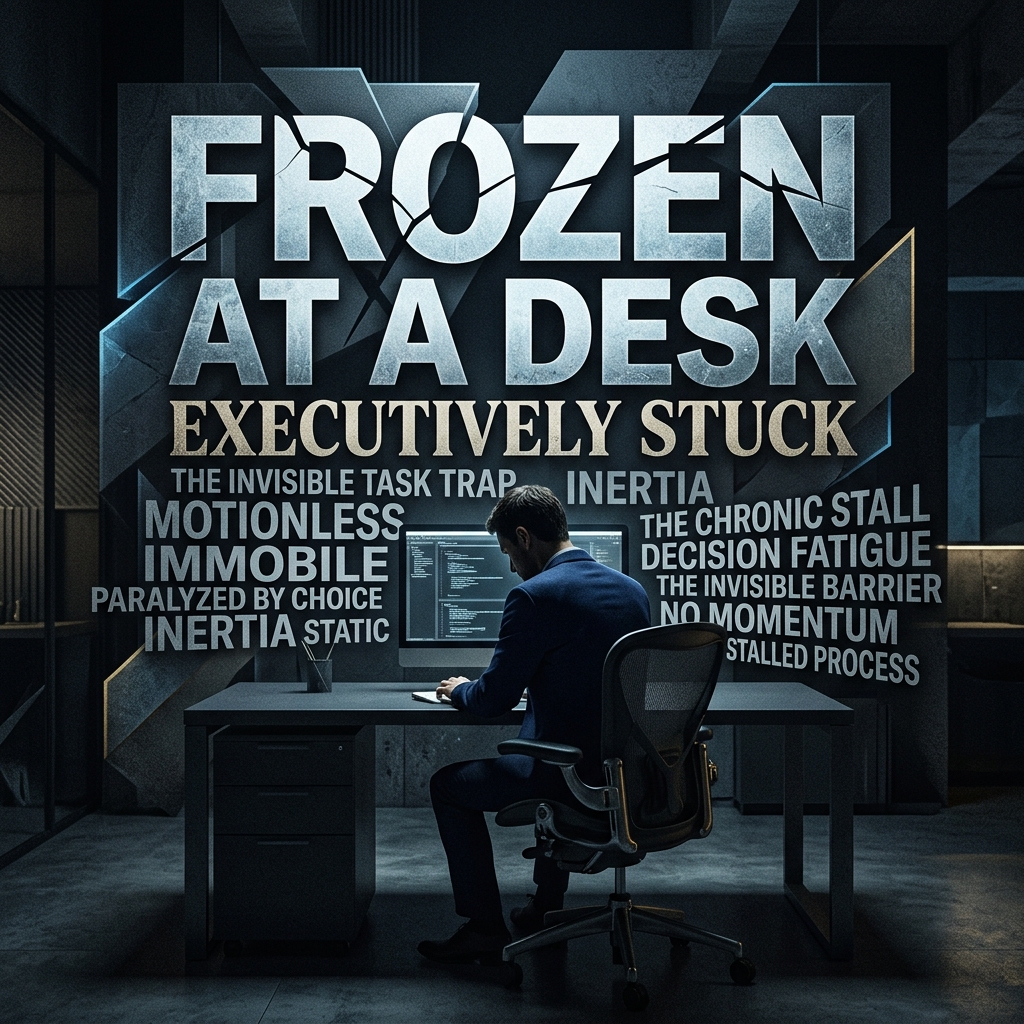
You know exactly what you need to do. You have the skills. You have the time. But you are staring at your screen, completely frozen.
Your brain has entered an executive shutdown. The cursor blinks. The slack messages pile up. And the longer you wait, the heavier the task becomes.
Most advice for ADHD paralysis at work is written for people who don’t have ADHD. They tell you to “break it down into smaller steps” or “set a Pomodoro timer.” But when you are trapped in the quicksand of an ADHD freeze, a timer doesn’t help. It just makes the panic louder.
You are running a high-performance engine in conditions it was never built for. The environment failed. You didn’t.
The Invisible Task Trap
High-ceiling ADHDers are capable of producing extraordinary results. You’ve likely built a career on your ability to hyperfocus and solve complex problems under pressure.
But when faced with routine, mundane, or vaguely defined professional tasks, that same brain stalls. We call this the Invisible Task Trap.
The task is under-stimulating. No stakes, no novelty, no clear “done” state. Your brain searches for a dopamine grip, finds nothing to hold, and spins.
The Feedback Desert
At work, we operate in what I call a “Feedback Desert.” ADHD task paralysis thrives here. There is no immediate consequence or reward for starting a quarterly report or drafting an email. The consequences are distant. The friction of starting is immediate.
For a neurotypical brain, that distance is manageable. For the ADHD brain, the horizon is too far away. We need immediacy. We need to lower the perceived cost of beginning.
The 2-Minute On-Ramp
Stop trying to finish the task. Stop trying to “do the work.”
When you are paralyzed, your only job is to break the freeze. You do this by engineering a Momentum Transfer.
The 2-Minute On-Ramp is a tactical strike against paralysis. Here are the rules:
- Choose a sub-task so small it feels insulting to your intelligence.
- It must take less than two minutes.
- It must require zero decision-making.
Don’t write the email. Open the draft and type the recipient’s name.
Don’t analyze the spreadsheet. Open the file and color-code the header row.
One small action. That’s the whole protocol. The physical tension of the freeze breaks, and momentum starts to move through the machine again.
Engineering Your Conditions
Are you trapped in the Quicksand or the Urgency Void? Take the 90-Second Friction Audit to decode your specific brand of creative paralysis, and get the exact protocol to fix it.
Your operating environment is the problem. Stop managing your ADHD with planners that don’t work and start engineering your conditions.
If you’re tired of the gap between your potential and your output, it’s time to decode your specific flow state triggers. The 2-Minute On-Ramp is just one protocol from the Emergency Stack.
To stop fighting your brain and start building an environment where you can consistently execute, download The Flow Decoder Workbook. It’s the system for high-ceiling ADHDers who need to turn potential into output.